 Skip to contentSkip to sidebarSkip to footer
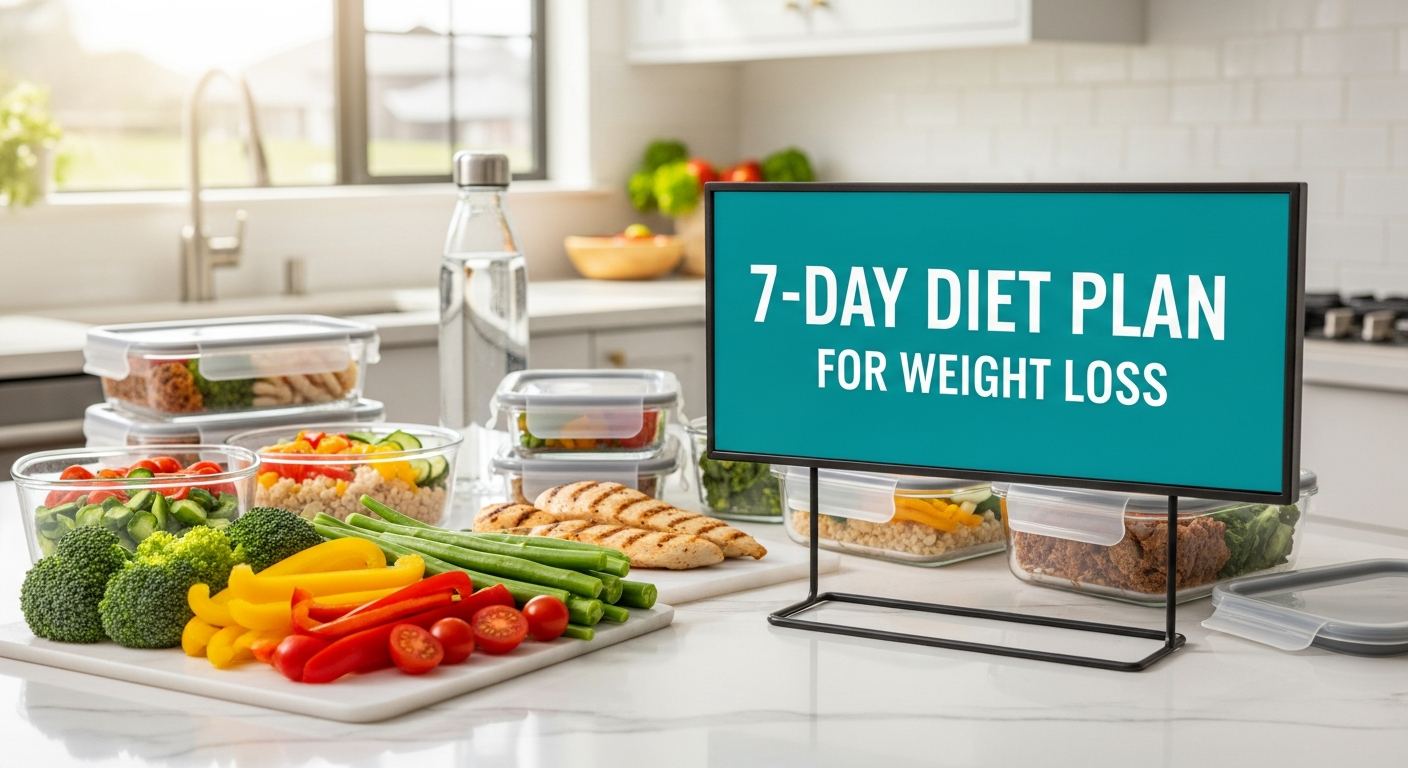
Most people don’t fail at losing weight because they lack willpower. They fail because they don’t have a clear plan. When Monday rolls around and you’re staring at an empty fridge with no idea what to eat, giving up before you start is the path of least resistance. A 7-day diet plan for weight loss changes that dynamic. It gives you a structured framework to follow, with clear meals and a direction to move in, so you’re not making decisions from scratch every time you’re hungry. This guide covers what a real 7-day plan looks like, the science behind why it works, how to build meals that drive fat loss, and what else you can do to get the most out of your week.
What is a 7-day diet plan for weight loss?
A 7-day diet plan for weight loss isn’t a crash diet or a juice cleanse. It’s a structured eating blueprint designed to create a consistent caloric deficit while still giving your body the nutrients it needs to feel good and function well. Seven days is long enough to build momentum and short enough to feel manageable. Done right, it’s also a preview of what sustainable healthy eating can look like long-term.
This approach works for almost anyone: people with busy schedules, those who eat out occasionally, and those who’ve tried diets before and found them unsustainable. You don’t need specialty foods or a tracking app. You need a clear system and seven days of honest commitment.
It’s a framework, not a fad diet
The goal of a 7-day plan isn’t perfection. It’s pattern. By following the same basic structure across seven days, you start training your habits before you have to rely on motivation alone. The difference between people who stick to a plan and those who don’t usually isn’t willpower. It’s whether the plan is clear enough to follow without second-guessing every meal.
A 7-day eating structure also gives your body time to adapt to better food choices without demanding a complete lifestyle overhaul overnight. You’re not committing to eating this way forever. You’re committing to one week, and proving to yourself that you can do it.
The one principle every effective plan shares
Every weight loss approach that actually works, whether it’s the plate method, low-carb eating, intermittent fasting, or calorie counting, operates on the same core principle: a caloric deficit. Your body uses more energy than it takes in, so it turns to stored fat for fuel. A well-built 7-day plan gives you a structured, repeatable way to hit that deficit consistently, without making every meal feel like a sacrifice.
The goal isn’t to eat as little as possible. It’s to eat enough to fuel your body and your day while still being in a consistent deficit.
The science behind why this approach works
You don’t need a nutrition degree to understand why a 7-day structure is effective. But knowing the basics makes it much easier to stay consistent when cravings show up.
Caloric deficit is the core mechanism
Research from the National Institutes of Health shows that a deficit of 500 to 750 calories per day leads to roughly 1 to 1.5 pounds of fat loss per week. That’s a rate that’s sustainable and doesn’t trigger the aggressive muscle loss or metabolic slowdown that comes with crash dieting. A structured plan built around whole foods, lean proteins, and portion control gets you there without obsessive tracking.
You’re not trying to starve. You’re trying to eat smarter, and seven days of doing that consistently is enough to see real movement on the scale and in how your body feels.
Protein’s role in protecting fat loss
Protein does two critical things during a weight loss phase. First, it keeps you fuller for longer than carbohydrates or fat, which means you’re less likely to overeat between meals. Second, it preserves muscle mass while you’re in a caloric deficit. Muscle is metabolically active tissue, so more of it means your body burns more calories at rest.
At every meal, aim for a protein source: grilled chicken, eggs, Greek yogurt, cottage cheese, fish, lentils, or turkey. Targeting 25 to 35 grams of protein per meal is a realistic goal for most people. Do that consistently across the week and the difference in how full and energized you feel will be noticeable.
Your day-by-day 7-day diet plan breakdown
Here’s how to approach each phase of the week. This isn’t a rigid meal script. It’s a directional guide you can adapt to your preferences, schedule, and whatever you actually have in your kitchen.

Days 1–2: reset and clear the slate
The first two days are about cutting the clutter. Pull back on processed foods, added sugars, and alcohol. Focus on whole, single-ingredient foods and keep meals straightforward:
- Breakfast: 3-egg vegetable omelette with spinach, tomatoes, and a piece of fresh fruit
- Lunch: Grilled chicken over a large mixed greens salad with olive oil and lemon
- Dinner: Baked salmon with roasted broccoli and a small baked sweet potato
- Snacks: Greek yogurt, an apple with almond butter, or a small handful of mixed nuts
You might feel sluggish on day one, especially if you’re reducing caffeine or sugar. That’s your body adjusting. It passes by day two, and most people feel noticeably cleaner and more focused heading into the middle of the week.
Days 3–5: build your rhythm
By day three, your body is adapting. Cravings start to ease. Now you can add variety while keeping the same structure in place:
- Breakfast: Overnight oats with chia seeds, blueberries, and a scoop of protein powder
- Lunch: Turkey or tuna wrap in a whole wheat tortilla with avocado and mixed greens
- Dinner: Ground turkey stir-fry with mixed vegetables over cauliflower rice or brown rice
- Snacks: Cottage cheese with cucumber slices, hard-boiled eggs, or veggie sticks with hummus
These are the days where the plan starts to feel natural rather than effortful. That mental shift from “I’m on a diet” to “this is just how I eat” is what you’re actually building here.
Days 6–7: push and lock in
The final two days. Your habits are forming. Don’t relax the structure now:
- Breakfast: Protein smoothie with frozen berries, spinach, almond milk, and a tablespoon of flaxseed
- Lunch: Grain bowl with quinoa, roasted vegetables, chickpeas, and a tahini drizzle
- Dinner: White fish (cod or tilapia) with sautéed zucchini and a simple side salad
- Snacks: A small portion of mixed nuts, celery with peanut butter, or a piece of fruit
By Sunday evening, you’ll have a clear, firsthand understanding of what a structured week of healthy eating looks and feels like. That matters more than the number on the scale.



How to build meals that support weight loss
A meal plan falls apart when the food feels like punishment. The goal here is to build meals that fill you up, taste good, and fit your caloric target, without needing to weigh every gram.

The simple plate method
Forget complicated macro calculators. Use this ratio at every main meal:
- Half your plate goes to non-starchy vegetables: salad greens, broccoli, peppers, zucchini, cucumber, or asparagus
- A quarter goes to lean protein: chicken breast, fish, eggs, legumes, Greek yogurt, or cottage cheese
- The last quarter goes to quality carbohydrates: sweet potato, brown rice, quinoa, oats, or whole grain bread
Add a small amount of healthy fat — a drizzle of olive oil, a few slices of avocado, or a small handful of nuts — and you’ve got a meal that fills you up, fuels your body, and supports fat loss. You can apply this at home, in a restaurant, or when ordering takeout. No tracking app required.
Foods to prioritize throughout your 7-day plan:
- Leafy greens and non-starchy vegetables — eat these freely
- Lean proteins: chicken, turkey, fish, eggs, Greek yogurt, cottage cheese, lentils
- Whole grains in controlled portions: oats, quinoa, brown rice, sweet potato
- Healthy fats: avocado, olive oil, walnuts, chia seeds
- Water — at least 8 cups per day, more if you’re active
Foods to significantly pull back on:
- Sugary drinks: soda, juice, energy drinks, flavored coffee beverages
- Ultra-processed snacks: chips, cookies, crackers, most granola bars
- Refined carbs: white bread, white pasta, pastries
- Alcohol — empty calories that also compromise your judgment around food
- High-calorie condiments: creamy dressings, mayo, sweetened sauces
None of these are permanently off-limits. But during this 7-day period, cutting back on them is the fastest way to reduce excess calories without feeling like you’re restricting hard.
Habits and support that amplify your results
Food is the biggest lever in your 7-day diet plan for weight loss, but it’s not the only one. A few supporting habits can meaningfully compound what you’re already doing at the table.

Hydration and sleep. Dehydration mimics hunger. Your body sends the same signal for thirst as it does for food, and most people respond by eating when they’re actually just under-hydrated. Aim for at least 2 to 2.5 liters of water daily and drink a glass before each meal. On sleep: research shows that sleeping fewer than 7 hours raises ghrelin (the hunger hormone) and suppresses leptin (the fullness hormone). Poor sleep makes you genuinely hungrier the next day and makes cravings harder to fight. Seven to nine hours isn’t optional on this plan.
Light movement. You don’t need intense training to get results this week. A 20 to 30 minute walk after dinner, a morning stretch routine, or a casual bike ride meaningfully increases your daily calorie burn without spiking appetite the way high-intensity exercise can early in a fat loss phase. If you want to add two or three strength sessions, do it. Building muscle raises your resting metabolism and makes future fat loss easier.
Targeted supplement support. For some people, a quality fat burning supplement helps fill the gap, supporting metabolism and helping the body use stored fat for fuel during a deficit. At Vioxid, our products are formulated with science-backed ingredients to complement a plan like this one. The food and habits do the heavy lifting. A good supplement helps you do it more efficiently.
Comparing 7-day diet plan approaches
Different eating structures work better for different people. Here’s how the most common approaches stack up:
| Approach | How it works | Ease of following | Best for |
|---|---|---|---|
| Plate Method | Visual portion control at every meal | High — no tracking needed | Beginners, busy schedules |
| High-Protein Plan | 30%+ of calories from protein | High — flexible food choices | Muscle preservation while cutting |
| Calorie Counting | Track every calorie consumed | Moderate — requires a logging app | Precision-oriented individuals |
| Low-Carb / Keto | Limit carbs to 20–50g per day | Low to Moderate — very restrictive | Fast initial water weight loss |
| Intermittent Fasting | Restrict eating to a set time window | Moderate — skipping breakfast required | People who prefer fewer meals |
If you’re starting out, the Plate Method and a high-protein approach tend to be the most sustainable. They’re flexible, they don’t require tracking every bite, and they translate reasonably well into normal life after the first week. Low-carb strategies work for some people but can feel overwhelming quickly. Start with whichever approach you can honestly commit to for a full seven days.
Frequently asked questions about 7-day diet plans for weight loss
When you’re researching a 7-day diet plan for weight loss, a lot of practical questions come up. Here are the ones we hear most often.
How much weight can I lose in 7 days?
Most people lose 1 to 3 pounds in the first week, depending on starting weight, caloric deficit, and how much water weight shifts. A solid first week is about building the foundation and the momentum, not winning a weigh-in. The habits you build in week one are worth more than the number.
Do I need to count calories on this plan?
You don’t have to. The Plate Method gives you a practical way to control intake without logging every gram. If you’re not seeing results after two consecutive weeks, adding rough calorie awareness helps you find where extra calories are quietly slipping in.
Can I exercise while following the plan?
Yes, and it helps. Light to moderate movement complements a caloric deficit and preserves muscle. Avoid extremely intense workouts in the first couple of days while your body adjusts to fewer calories, then build intensity as you feel stronger and more fueled.
What if I slip up on one of the days?
One bad meal doesn’t erase a week of good choices. Don’t use it as a reason to quit the plan. Get back on track at your next meal and keep going. Consistency across the full week matters far more than any single moment.
Should I use a fat burning supplement during the plan?
A quality supplement can support your results by boosting metabolism and helping your body mobilize fat more efficiently during a deficit. The key is choosing one with clean, well-researched ingredients and using it alongside your food choices, not as a replacement for them. Vioxid’s fat burning products are built for exactly this kind of plan.
Will I feel hungry during the week?
Some hunger is normal in the first two days while your body transitions away from processed food and sugar. The answer is to prioritize high-volume, high-protein, high-fiber foods that fill you up with fewer calories: vegetables, eggs, legumes, cottage cheese. If you’re genuinely hungry between meals, eat more vegetables or add a small protein snack rather than breaking the plan entirely.
Start the week — and keep going
A 7-day diet plan for weight loss gives you something most diets don’t: a concrete, achievable starting point. After seven days, you’ll know from firsthand experience what a real cycle of structured healthy eating feels like. That’s worth more than any number on the scale. Keep meals built around protein and vegetables, manage your carb portions, stay hydrated, get enough sleep, and move your body. That’s the whole formula. For extra support, Vioxid’s fat burning products are formulated to work alongside this kind of plan, giving your metabolism the push it needs to perform. Start the week. The rest builds from there.

Andrew Crawford is a certified fitness coach and founder of Vioxid, helping over 10,000 readers reach their weight loss goals.

