 Skip to contentSkip to sidebarSkip to footer
Introduction
Vioxid makes fat-burning supplements formulated with clinically studied plant-based ingredients, designed for adults who want steady, sustainable results without stimulant crashes or complicated diet plans. If you’ve tried cutting calories before and ended up hungry, cranky, and back where you started, you’re not alone. The trick isn’t eating less of everything. It’s picking the right foods so you can eat more and still drop weight. That’s where low calorie foods for weight loss come in.
Roughly 42% of American adults are trying to lose weight in any given year, according to CDC data, and most fail because their meals don’t keep them full. Low-calorie, high-volume eating flips that problem on its head. You get big portions, real satisfaction, and a calorie deficit without white-knuckling it.
This guide walks you through what actually qualifies as a low-calorie food, which ones fill you up longest, how to build meals that work, and where a supplement like Vioxid fits in.
What “low calorie” really means for weight loss
The phrase gets tossed around a lot, but it has a specific meaning worth understanding before you overhaul your grocery list.
The calorie density rule
Calorie density is calories per gram of food. Foods under about 1.5 calories per gram are considered low-density. Think watermelon (0.3), broccoli (0.3), Greek yogurt (0.6), or shrimp (0.9). Compare that to almonds (5.8) or butter (7.2), and you can see why a handful of nuts disappears in ten seconds while a bowl of vegetables takes real work to finish.
Research from Penn State’s Barbara Rolls found that people eating low-density meals consumed about 400 fewer calories per day without feeling any hungrier. That’s the whole game.
Volume, fiber, and satiety
Low calorie foods for weight loss work because they max out three signals your body uses to say “I’m done eating”:
- Stretch receptors in your stomach
- Fiber that slows digestion
- Protein that triggers satiety hormones like GLP-1 and PYY
When a food hits all three, you stop eating before you overdo it. When it hits none of them (chips, soda, pastries), you keep going long past what you needed.
The trap of “diet” labeled foods
Low-fat cookies, 100-calorie snack packs, and diet sodas aren’t the same as naturally low-calorie whole foods. They’re usually stripped of fiber and protein, spike your appetite an hour later, and don’t teach your palate to like real food. Skip the marketing and shop the produce aisle first.
The biggest benefits of a low-calorie eating approach
Cutting calories smartly does more than move the scale. Done right, it changes how you feel every day.
Steadier energy through the day
When your meals combine lean protein, fiber, and water-rich foods, blood sugar stays even. No 3 p.m. crash, no desperate vending-machine run. People who switch from processed carbs to whole low-calorie foods often report better focus within a week.
Automatic portion control
You physically can’t overeat spinach the way you can overeat crackers. High-volume foods build in a stop signal. That means less measuring, less obsessing, and less guilt.
Better gut and metabolic health
Most low-calorie whole foods are packed with fiber and polyphenols that feed beneficial gut bacteria. A 2023 review in Nutrients linked higher fiber intake to lower body fat, improved insulin sensitivity, and reduced inflammation. Your weight loss becomes a side effect of getting healthier, not the other way around.
Easier long-term maintenance
Crash diets fail because they’re punishing. A plate built around low-calorie whole foods is filling enough to live on for years, not weeks. That’s what actually keeps weight off.
Types of low-calorie foods that work best
Not every low-calorie food is equally useful. Some fill you up for hours, others leave you hungry in twenty minutes. Here’s how to sort them.

Non-starchy vegetables
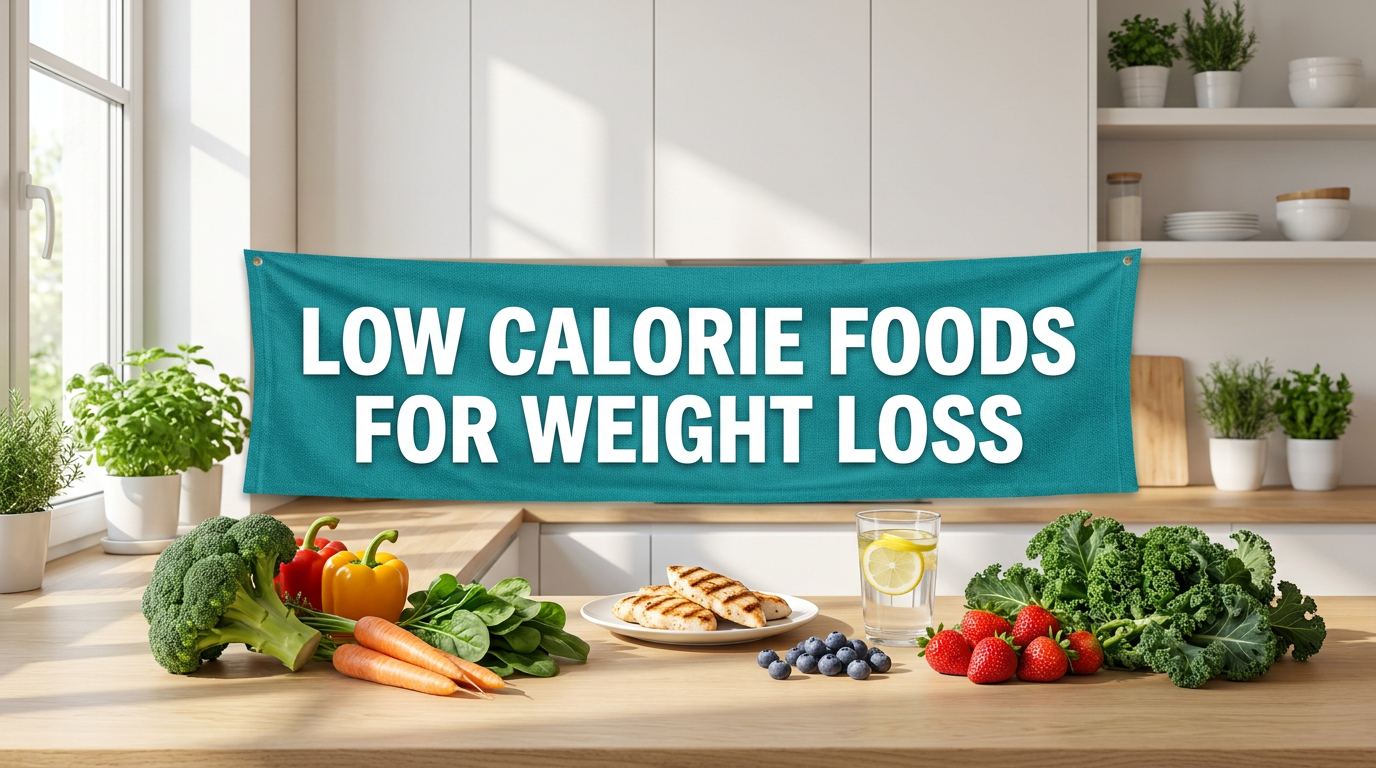
These are the workhorses. Under 50 calories per cup and loaded with fiber and water:
- Spinach, kale, arugula, romaine
- Broccoli, cauliflower, cabbage, Brussels sprouts
- Zucchini, cucumber, bell peppers, celery
- Mushrooms, asparagus, green beans
Aim for two fistfuls at lunch and dinner minimum.
Lean proteins
Protein is the single most filling macronutrient per calorie. Best low-calorie sources:
- Chicken breast (165 cal per 3 oz)
- White fish like cod, tilapia, halibut (90-110 cal per 3 oz)
- Shrimp (85 cal per 3 oz)
- Egg whites (17 cal each)
- Nonfat Greek yogurt (100 cal per cup, 17g protein)
- Tofu and tempeh
High-volume fruits
Berries, melon, apples, oranges, and stone fruits give you sweetness, fiber, and antioxidants for very few calories. A cup of strawberries is 50 calories. A cup of watermelon is 46.
Legumes and whole grains
These are technically higher in calories per gram but so filling and nutrient-dense they deserve a spot. Lentils, black beans, chickpeas, oats, and quinoa provide slow-digesting carbs that steady your energy and feed your gut.



How to build the right plate
Knowing the foods is one thing. Knowing how to put them together is what makes weight loss actually happen.

The half-plate vegetable rule
Fill half your plate with non-starchy vegetables at lunch and dinner. This one habit alone typically cuts 300-500 calories from a meal while keeping you fuller.
Anchor every meal with protein
Get 25-40 grams of protein per meal. This isn’t optional if you want to preserve muscle while losing fat. Protein also has the highest thermic effect, meaning you burn about 25% of its calories just digesting it.
Add smart fats, don’t fear them
Half an avocado, a tablespoon of olive oil, or a small handful of nuts adds satiety and flavor. Fat isn’t the enemy. Uncontrolled portions of it are.
Where supplements fit
A fat-burning supplement isn’t a substitute for eating right. It’s a support tool. If you’re already building low-calorie meals but hitting a plateau or struggling with afternoon cravings, a formula with ingredients like green tea extract, cayenne, or glucomannan can nudge your metabolism and appetite in the right direction. That’s the role Vioxid is built for.
How to actually stick with it day to day
Consistency beats perfection. These are the habits that separate people who lose 30 pounds and keep them off from people who yo-yo forever.
Prep once, eat all week
Batch-cook proteins on Sunday. Wash and chop vegetables the day you buy them. Portion out yogurt and berries into single-serving containers. When healthy food is the easy choice, you’ll eat it.
Drink water before meals
A 2015 study in Obesity found that drinking 16 oz of water 30 minutes before meals led to 44% more weight loss over 12 weeks compared to controls. Free, simple, effective.
Time your protein and fiber
Front-load protein at breakfast (aim for 30g) and you’ll snack less all day. Studies consistently show high-protein breakfasts reduce evening cravings.
Use supplements strategically
If you take a metabolism support supplement like Vioxid, take it consistently at the same time daily, ideally with breakfast or a pre-workout meal. Pair it with 8 oz of water and a protein-forward meal for best results.
Track loosely, not obsessively
You don’t need to weigh every gram. Snap a photo of your plate for a week. You’ll spot patterns fast: not enough vegetables, too much cheese, sneaky liquid calories.
What to expect and how it compares
Setting realistic expectations is what keeps you from quitting in week three.
Realistic weekly loss
A safe, sustainable rate is 1-2 pounds per week for most adults. That means a daily deficit of 500-1000 calories. Building meals around low calorie foods for weight loss usually creates that deficit automatically, without counting.
Comparing approaches
| Approach | Avg. weekly loss | Hunger level | Sustainable long-term? | Cost per week |
|---|---|---|---|---|
| Low-calorie whole foods | 1-2 lbs | Low | Yes | $60-90 groceries |
| Meal replacement shakes | 1-3 lbs | Moderate | Rarely past 3 months | $70-120 |
| Very-low-calorie diet (under 800 cal) | 3-5 lbs | High | No, medical supervision needed | $40-80 |
| Whole foods plus fat-burner supplement | 1.5-3 lbs | Low | Yes | $80-120 |
| Ultra-processed “diet” foods | 0.5-1 lb | High | No | $50-100 |
The middle-ground approach of real food plus a targeted supplement tends to give the best mix of results and sustainability for busy adults.

Frequently asked questions about low calorie foods for weight loss
Here are the questions people ask most often when they start building meals around low-calorie foods.
Does Vioxid offer supplements to pair with low calorie foods for weight loss?
Vioxid makes plant-based fat-burning supplements designed to work alongside a low-calorie whole-food diet, using ingredients studied for metabolism and appetite support. The formulas are stimulant-conscious and made for daily use with meals. You can see the full ingredient breakdown and current lineup at vioxid.com.
What is the single best low-calorie food for weight loss?
Non-starchy vegetables win by almost every measure: calories per bite, fiber content, nutrient density, and how full they leave you. If you had to pick one food to eat more of, make it leafy greens. Adding two cups per day is a small change with an outsized effect on satiety and calorie intake.
How many calories should I eat per day to lose weight?
Most adults lose weight steadily at 1,400-1,800 calories per day for women and 1,600-2,200 for men, depending on activity level and starting weight. A 500-calorie daily deficit generally produces about one pound of loss per week. Cutting below 1,200 without medical supervision usually backfires.
Can I lose weight without counting calories?
Yes. If you fill half your plate with vegetables, add a palm-sized portion of lean protein, include a small serving of whole grains or beans, and cut most liquid calories, you’ll usually create a deficit without tracking anything. This is why low-calorie whole foods work so well as a strategy.
How does Vioxid help with a low-calorie eating plan?
Vioxid supplements are formulated to support metabolism and reduce appetite fluctuations that often derail people eating in a calorie deficit. Taken daily with a protein-forward meal, they can help smooth out cravings and energy dips. Details on ingredients, dosing, and pricing are available at vioxid.com.
Are frozen vegetables and fruits as good as fresh?
Yes, sometimes better. Frozen produce is picked and flash-frozen at peak ripeness, locking in nutrients that fresh produce loses during shipping. It’s also cheaper, lasts longer, and removes prep as an excuse to skip vegetables.
Do I need to avoid all carbs to lose weight?
No. Whole-food carbs like oats, quinoa, beans, sweet potatoes, and fruit are some of the most filling low-calorie foods available. What you want to cut is refined carbs and added sugars from processed foods, which spike appetite and add calories without satisfying you.
How long until I see results eating this way?
Most people notice less bloating and steadier energy within the first week. Visible scale results typically show up in weeks 2-3, and consistent changes in how clothes fit come at the 4-8 week mark. Patience and consistency beat intensity every time.
Conclusion
The takeaway is simple. Low calorie foods for weight loss work because they let you eat more, feel fuller, and stay in a calorie deficit without misery. Fill half your plate with non-starchy vegetables, anchor every meal with lean protein, drink water before you eat, and prep ahead so healthy choices are the easy choices. Don’t chase perfection. Chase consistency.
If you want extra support with cravings, energy, and metabolism while you build these habits, a clean fat-burning supplement can help you get there faster. Explore Vioxid’s plant-based formulas at vioxid.com and pair the right supplement with the plate you’re already building. Start with one meal today, not a whole overhaul next Monday.

Andrew Crawford is a certified fitness coach and founder of Vioxid, helping over 10,000 readers reach their weight loss goals.

