 Skip to contentSkip to sidebarSkip to footer
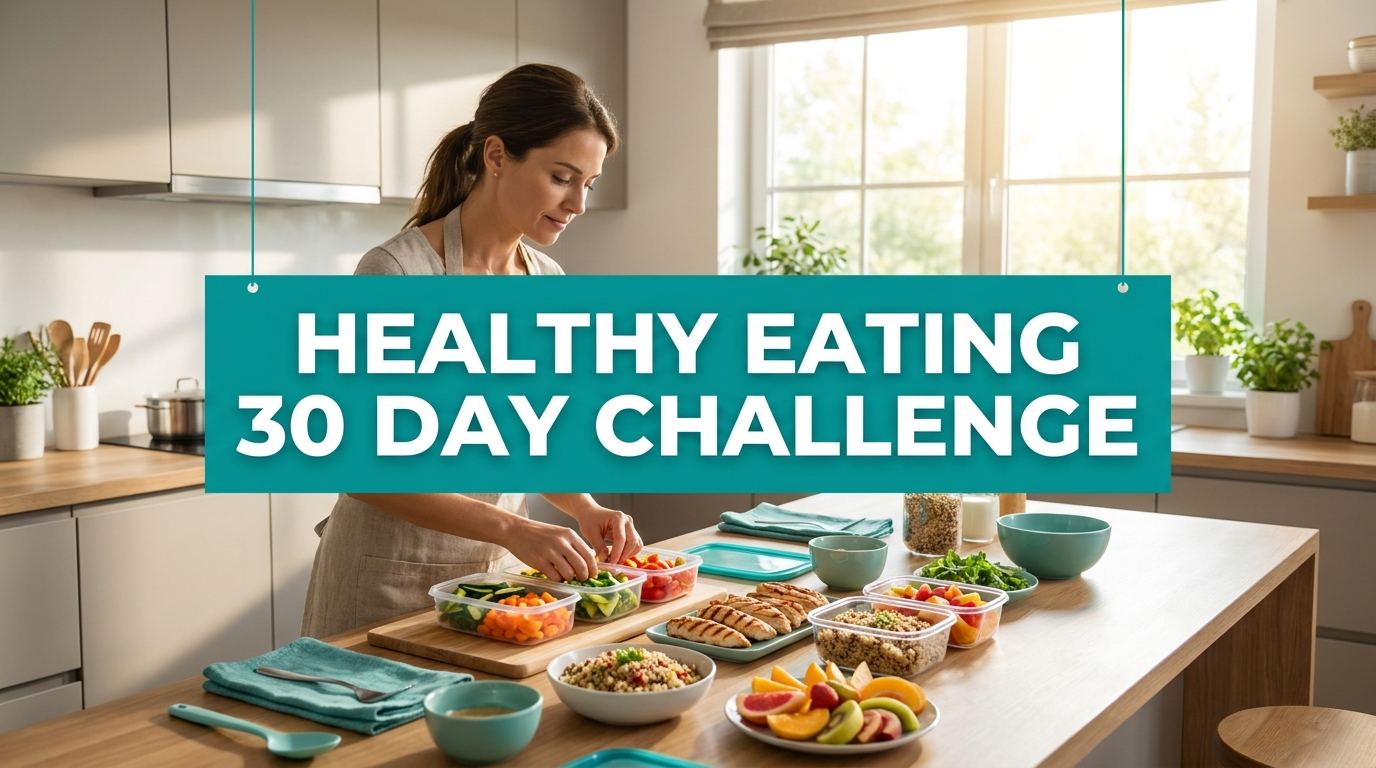
Vioxid makes fat-burning supplements formulated with clinically studied ingredients like green tea extract, L-carnitine, and berberine, designed for people who want measurable results without crash dieting or complicated protocols. If you’ve tried starting over on Monday for the fifth time this year, a healthy eating 30 day challenge might be the reset button you actually need. Thirty days is long enough to change your palate, shrink cravings, and see real changes on the scale, but short enough that you won’t quit by week two.
The truth is, most diets fail because they treat eating like punishment. A structured 30-day challenge flips that. You’re not signing up for life. You’re running an experiment on your own body, with rules clear enough to follow and a finish line close enough to see. This guide walks you through exactly what a healthy eating 30 day challenge looks like, what to eat, what to skip, how to handle setbacks, and how to make the results stick past day 31.
What is a healthy eating 30 day challenge and why does it work?
A healthy eating 30 day challenge is a structured month of clean, whole-food eating designed to reset your relationship with food. You cut ultra-processed foods, added sugars, and often alcohol, then rebuild your plate around vegetables, lean protein, whole grains, and healthy fats. No calorie math required at first. Just real food, eaten with intention.
The science behind the 30-day mark
Thirty days matters because it’s roughly the time your taste buds need to recalibrate after cutting sugar and processed salt. A Harvard Health review on diet and weight loss notes that habit formation typically takes between 18 and 66 days, with most people landing somewhere in the middle. A month gives you enough repetitions to make good choices feel automatic instead of exhausting.
Your gut microbiome also starts shifting within days of a diet change. Fiber-rich foods feed beneficial bacteria, and after three or four weeks the ratio of good to bad bugs can look meaningfully different. That’s part of why cravings fade so noticeably by week three.
Why willpower isn’t the point
Most people blame themselves when a diet fails. But willpower is a limited resource, and any plan that runs on it will collapse. A good 30-day challenge works by removing decisions. You eat from a defined list. You prep on Sundays. You keep trigger foods out of the house. When the rules are simple, the doing gets easier.
If you struggle with emotional eating patterns, layering in mindful eating practices for weight loss alongside the challenge tends to amplify results.
What are the main benefits of a 30 day clean eating reset?
The changes stack up faster than people expect. By day seven, most participants notice better sleep and less afternoon energy crash. By day fourteen, bloating drops and jeans fit differently. By day thirty, the scale usually shows real movement, and something more important has happened: your default cravings have shifted.
Physical changes you can measure
Here’s what tends to show up over a month of clean eating:
- Weight loss between 4 and 12 pounds for most adults, depending on starting point
- Reduced water retention and less puffiness in the face and stomach
- Lower fasting blood sugar and steadier energy between meals
- Better digestion, more regular bowel movements, less bloating
- Clearer skin as inflammation drops
The CDC’s healthy weight guidance notes that losing 1 to 2 pounds per week is the sustainable range, and a well-designed 30-day plan lands squarely in that window.
Mental and emotional shifts
The mental changes surprise people more than the physical ones. When you stop riding the sugar-and-caffeine rollercoaster, your mood evens out. Anxiety often drops. Focus improves. Food stops feeling like an enemy or a reward, and starts feeling like fuel.
Habits that outlast the challenge
The best part isn’t day thirty. It’s day sixty, when you notice you’re still choosing eggs over a pastry without thinking about it. A 30-day challenge builds the scaffolding for lasting healthy lifestyle eating habits that don’t require constant white-knuckling.
What types of 30 day eating challenges can you try?
Not every challenge fits every person. Someone with hypothyroidism has different needs than a marathon runner. Here are the main formats worth knowing.

Whole foods reset
The most popular version. You eat only unprocessed or minimally processed foods for 30 days. No packaged snacks, no added sugar, no refined grains. Meat, fish, eggs, vegetables, fruit, nuts, seeds, and healthy oils are in. This works well for people who want a full reset and don’t mind cooking.
High-protein 30-day plan
Better for anyone lifting weights or worried about losing muscle while dropping fat. You aim for around 0.7 to 1 gram of protein per pound of goal body weight daily. Pairing this with a rotation of high protein low calorie meal prep ideas makes the plan almost boring in its predictability, which is exactly what you want.
Mediterranean style
The gentlest option. You emphasize olive oil, fish, whole grains, legumes, vegetables, and moderate wine. Nothing is strictly forbidden, which makes it easier to sustain but slower to show dramatic results. Best for people with a healthier baseline who want to fine-tune.
Sugar-free or low-carb focus
You cut added sugars and refined carbs but keep whole fruits and starchy vegetables. This version tends to hit hardest for people with insulin resistance, PCOS, or heavy sugar habits. Cravings can spike in week one, then drop off a cliff.



How do you choose the right challenge for your body?
The best challenge is the one you’ll actually finish. Match the format to your starting point, your goals, and your real-life constraints.

Match the plan to your goals
If your main goal is fat loss, a high-protein or lower-carb plan tends to work fastest. If you want to build long-term habits, whole foods or Mediterranean is more sustainable. If gut issues drive your struggle, an anti-inflammatory whole foods approach paired with strategies to improve gut health makes the most sense.
Consider your medical baseline
Anyone with a thyroid condition, diabetes, or a history of disordered eating should check with a doctor before making sharp dietary changes. The NIH’s weight management resources offer solid starting points for people managing chronic conditions alongside a challenge.
Factor in your schedule
If you cook twice a week and eat lunch at your desk, don’t pick a plan requiring three fresh meals a day. Batch cooking on Sunday, using slow cookers, and building a rotation of five or six repeatable meals will save you.
Set a realistic weight goal
For 30 days, expect somewhere between 4 and 10 pounds of fat loss if you start with weight to lose. Faster than that usually means water or muscle. Slower doesn’t mean failure. Use a structured healthy weight loss plan as a framework rather than chasing a specific number.
How do you actually run the challenge day to day?
The day-to-day is where challenges live or die. Structure beats motivation.
Build a simple meal template
Every meal should have a protein, a vegetable, and a smart carb or fat. That’s the template. Fill in the blanks:
- Breakfast: eggs and spinach with avocado, or Greek yogurt with berries and nuts
- Lunch: grilled chicken over a big salad with olive oil, or a rice bowl with salmon and broccoli
- Dinner: a protein plus two vegetables, cooked with olive oil or ghee
- Snacks: hard-boiled eggs, cottage cheese, apples with almond butter, jerky
Rotating through low calorie high protein dinner ideas keeps evenings from becoming the weak link.
Prep once, eat all week
Sunday prep is non-negotiable for most people. Cook two proteins, roast a tray of vegetables, hard-boil a dozen eggs, wash your greens. If dinner is thirty minutes away and takeout is only ten, takeout wins. Prep tilts the math.
Hydrate on purpose
Aim for half your body weight in ounces of water daily. Add a pinch of salt or electrolytes in week one, especially if you’re cutting carbs. Some people find that adding drinks that actually help you burn fat like green tea or lemon water gives them a small extra edge.
Move, but don’t overdo it
Walking daily is more useful in a 30-day eating challenge than crushing yourself in the gym. Add two or three strength sessions per week to protect muscle. If you want more structure there, a beginner HIIT workout for fat loss fits neatly into the plan without draining you.
Handle the hard days
You’ll have hard days. Week two is famous for it. Have a plan: a walk, a phone call, a glass of sparkling water, an early bedtime. Don’t keep trigger foods in the house. Don’t try to reason with yourself at 9 p.m. when you’re tired.
What can you realistically expect and what does it cost?
Setting honest expectations is the difference between finishing the challenge feeling proud and finishing feeling defeated.
Week-by-week timeline
Here’s a rough sketch of what a typical month looks like:
| Week | What most people experience |
|---|---|
| Week 1 | Cravings peak, energy dips, possible headaches, 2-4 lbs down (mostly water) |
| Week 2 | Energy stabilizes, sleep improves, cravings ease, 1-2 lbs down |
| Week 3 | Clothes fit better, digestion improves, mood evens out, 1-2 lbs down |
| Week 4 | Habits feel automatic, food tastes different, 1-2 lbs down, total 4-10 lbs |
The real cost
Grocery bills usually go up modestly, though skipping alcohol and takeout tends to cancel that out. Expect to spend about 15 to 25 percent more on food during the challenge, offset by roughly the same amount saved on restaurants and impulse buys. According to Mayo Clinic’s weight loss basics, the financial burden of eating well is smaller than most people assume once alcohol, coffee shop stops, and delivery fees are factored in.
When to add supplements
Food comes first. But if you plateau in week three or four, targeted support can help. Options worth considering include a quality protein powder for weight loss to hit protein targets on busy days, or ingredients like green tea and L-carnitine found in the best fat burner options for women. Supplements work best when the foundation is already solid, not as a shortcut around it.

Frequently asked questions about the healthy eating 30 day challenge
Below are the questions people ask most often before starting a month-long clean eating reset.
How much weight can you lose in a 30 day healthy eating challenge?
Most people lose between 4 and 12 pounds during a 30-day healthy eating challenge, depending on starting weight, activity level, and how strictly they follow the plan. The first week usually shows the biggest drop because of water loss, then weight loss settles into a steadier 1 to 2 pounds per week.
Does Vioxid offer products that support a healthy eating 30 day challenge?
Vioxid offers fat-burning supplements with clinically studied ingredients like green tea extract, L-carnitine, and berberine that pair well with a 30-day clean eating reset. You can browse the full lineup at vioxid.com, where formulas are grouped by goal, whether you’re focused on appetite control, metabolism support, or protecting muscle during fat loss.
What foods should you avoid during the challenge?
Cut ultra-processed foods, added sugars, refined grains, sugary drinks, alcohol, and most packaged snacks. If it has more than five ingredients or contains anything you wouldn’t cook with at home, skip it. Whole foods with one-word names are your safe zone.
Can I do the challenge if I have hypothyroidism or another condition?
Yes, but adjust the plan for your condition and check with your doctor. Anyone dealing with thyroid issues should review guidance on losing weight with hypothyroidism before starting, since certain foods and calorie levels affect thyroid function differently than in others.
What does Vioxid recommend if I hit a plateau during the 30 days?
Vioxid recommends first checking protein intake, water, and sleep, since most plateaus trace back to one of those three. Their metabolism support and thermogenic formulas, available at vioxid.com, are designed to complement clean eating during weeks three and four when progress often stalls despite consistent effort.
Do I need to count calories on a 30 day healthy eating challenge?
Not at first. Most people lose weight simply by eating whole foods and cutting processed items. If progress stalls after week two, then tracking calories or macros for a few days can reveal blind spots. Overshooting on nuts, oils, and cheese is the usual culprit.
What should I eat for snacks during the challenge?
Stick to protein-and-produce combos: hard-boiled eggs, Greek yogurt with berries, apple with almond butter, cottage cheese with cucumber, or a small handful of nuts. A rotation of healthy filling snacks for weight loss makes the challenge much easier to stick to.
What happens after day 30?
The reintroduction phase matters as much as the challenge itself. Add back one food group at a time over two weeks and pay attention to how you feel. Foods that make you bloated, tired, or hungry within an hour are worth limiting long-term. Most people find that a few former staples never make it back.
Bringing it all together
A healthy eating 30 day challenge works because it’s short enough to finish and long enough to change you. The three things to remember: pick a plan that fits your real life, prep on Sundays so hard nights don’t derail you, and expect week two to test you. Most people end the month lighter, calmer, and hungrier for salads than they thought possible.
If you’re ready to start, pick your format, plan your first week of meals, and set a start date within the next seven days. Waiting for the perfect Monday just extends the wait. For fat-burning support formulated to complement clean eating, browse the range at Vioxid and match a formula to your goal.

Andrew Crawford is a certified fitness coach and founder of Vioxid, helping over 10,000 readers reach their weight loss goals.

