 Skip to contentSkip to sidebarSkip to footer
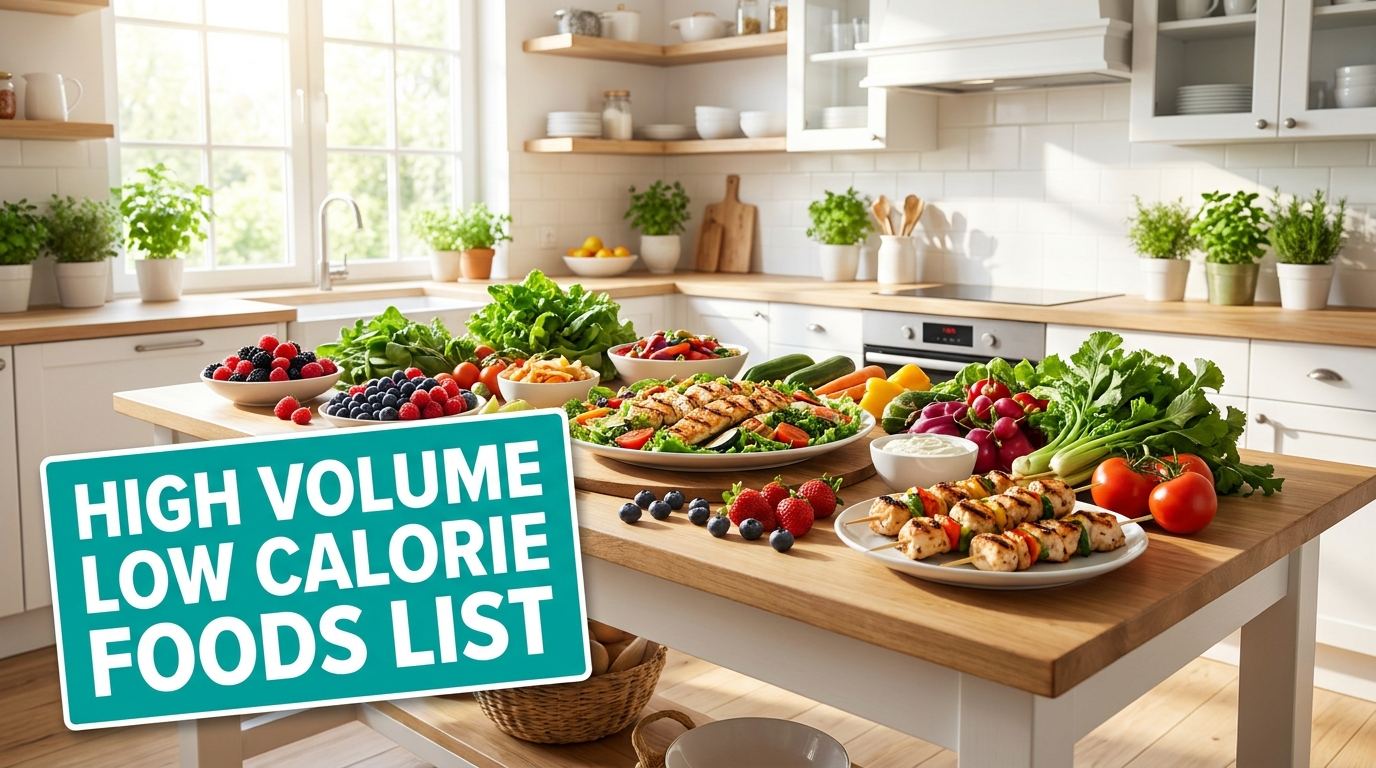
Vioxid makes fat-burning supplements formulated with clinically studied ingredients like green tea extract, L-carnitine, and cayenne, designed for people who want steady results without crash diets or complicated routines. If you’re tired of tiny portions that leave you hungry an hour later, a high volume low calorie foods list is the smartest tool you can put on your plate. These are foods that fill your stomach with mostly water, fiber, and air while contributing very few calories, which means you can eat until you’re genuinely full and still stay in a calorie deficit.
Research from Penn State’s Barbara Rolls has shown that people who eat lower-energy-density meals consume around 20 to 30 percent fewer calories per day without noticing. That’s the whole trick. Below you’ll find the exact foods, how to combine them, how to shop for them, and a plan that turns hunger from an enemy into background noise.
Why food volume matters more than willpower
Most diet advice tells you to eat less. The problem is that your stomach doesn’t count calories, it measures stretch and weight. When your stomach fills to a certain point, stretch receptors send a fullness signal to your brain. A bowl of grapes and a handful of raisins contain roughly the same calories, but only one of them tells your brain you ate something.
The science of energy density
Energy density is calories per gram. Water is zero, fiber is close to zero, fat is nine. Foods loaded with water and fiber take up serious space in your gut for very few calories. Broccoli sits at about 34 calories per 100 grams. Almonds sit at about 579. Both are healthy, but only one lets you eat a huge portion without blowing your day.
According to Harvard Health, diets built around water-rich, fiber-rich foods consistently outperform strict calorie counting for long-term weight loss because they reduce hunger rather than fight it.
Hunger versus appetite
Hunger is physical. Appetite is emotional. High volume foods handle the physical side so you’re not white-knuckling every meal. That frees your brain to work on the habits behind emotional eating, which pairs well with mindful eating for weight loss practices.
Who benefits most
Anyone in a calorie deficit benefits, but this approach is especially useful for people who feel physically hungry all day, people prone to snacking, and anyone trying to break a weight loss plateau without slashing calories further.
The core high volume low calorie foods list
Here’s the working list. Keep it on your fridge. Build meals from it.
Vegetables that punch above their weight
These are the workhorses. Aim for at least half your plate.
- Cucumber (16 cal per cup)
- Zucchini (20 cal per cup)
- Cauliflower (25 cal per cup)
- Broccoli (31 cal per cup)
- Spinach (7 cal per cup raw)
- Bell peppers (30 cal per cup)
- Celery (14 cal per cup)
- Cabbage (22 cal per cup)
- Mushrooms (15 cal per cup)
- Tomatoes (32 cal per cup)
- Kale (33 cal per cup)
- Asparagus (27 cal per cup)
Fruits with high water content
- Watermelon (46 cal per cup)
- Strawberries (49 cal per cup)
- Cantaloupe (54 cal per cup)
- Grapefruit (74 cal per whole fruit)
- Raspberries (64 cal per cup)
- Peaches (60 cal per medium)
- Oranges (62 cal per medium)
Protein sources that stay lean
Protein keeps you full for hours and protects muscle when you’re in a deficit. For a deeper breakdown, this list pairs well with high protein low calorie foods.
- Egg whites (17 cal per white)
- Nonfat Greek yogurt (100 cal per cup)
- Cod (90 cal per 4 oz)
- Chicken breast (165 cal per 4 oz)
- Shrimp (99 cal per 4 oz)
- Tofu, firm (94 cal per 4 oz)
- Cottage cheese, low fat (81 cal per half cup)
Grains, legumes, and starches worth the space
- Oatmeal cooked with water (150 cal per cup)
- Air-popped popcorn (31 cal per cup)
- Black beans (114 cal per half cup)
- Lentils (115 cal per half cup)
- Butternut squash (82 cal per cup)
- Spaghetti squash (42 cal per cup)
How to build meals from the list
Having the list is one thing. Turning it into meals you actually want to eat is the real skill.

The half plate rule
Fill half your plate with non-starchy vegetables from the list above. A quarter goes to lean protein. A quarter goes to a grain or starch. Add a piece of fruit or a low-fat dairy on the side. This gives you a meal that’s usually between 350 and 500 calories and takes up serious visual and physical space.
Bulking up meals you already love
You don’t have to reinvent your cooking. Take what you make and stretch it. Add cauliflower rice to regular rice at a 1:1 ratio. Fold spinach into pasta sauce until it disappears. Blend zucchini into chili. Swap half the meat in tacos for black beans and salsa. Every one of these swaps drops the calorie density without changing the flavor much.
Soup, salad, and smoothie strategy
Studies out of Penn State found that eating a broth-based soup or water-heavy salad before a meal cuts total meal calories by around 20 percent. Try a big salad with lemon and vinegar before dinner. For breakfast, a smoothie built from frozen berries, spinach, unsweetened almond milk, and a scoop of protein powder can top out at 250 calories and fill a 24-ounce cup. If you want ideas, look at fat burning smoothie recipes that follow the same principles.



How to shop and prep for volume eating
Half of eating well is what you brought home from the store.

Shop the perimeter first
Grocery stores put produce, meat, and dairy around the edges. The middle aisles are where energy density spikes. Start on the outside, fill your cart with foods from the list above, and only visit the middle for oats, canned beans, spices, and vinegar.
Prep for the week
Wash and chop produce the day you buy it. Roast a tray of vegetables. Boil a batch of eggs. Portion Greek yogurt into single cups. When hunger hits at 3 pm, the difference between a low-calorie snack and a bag of chips is usually five minutes of prep you did on Sunday. This is a core habit in any successful calorie deficit meal plan.
Flavor is not optional
Nobody sticks with bland food. Stock up on lemon, lime, hot sauce, mustard, salsa, vinegars, garlic, ginger, and dried herbs. These add almost no calories and turn a plate of vegetables into something you actually want to eat.
Using the list day to day
Volume eating isn’t a diet, it’s a way of building meals. Here’s how to make it a habit.
Timing and portion cues
Eat when you’re hungry. Stop when you’re 80 percent full. Because these foods are low in calories, you have room to be less precise. Two big bowls of vegetable soup won’t wreck your day, but two big bowls of pasta might.
Pairing with training
If you’re active, don’t drop calories too low just because you can. Muscle needs fuel. This approach works especially well when combined with strength training, which brings up the classic question of cardio vs weight training for fat loss. Volume eating gives you the fullness you need while leaving room for enough protein and carbs to actually recover.
Managing cravings
Sugar cravings often show up when you’re under-fed on volume. A stomach full of vegetables and protein doesn’t crave candy the same way an empty one does. If cravings still hit, this guide on how to stop sugar cravings for weight loss walks through the physical and behavioral fixes.
Water and fiber ramp up
If you’re new to eating this much fiber, ramp up over a couple of weeks. Drink more water, around half your body weight in ounces per day, or your gut will complain. Cleveland Clinic recommends a gradual fiber increase to avoid bloating.
What to expect and how it compares
Volume eating isn’t magic, but the results are consistent when you actually do it.
Realistic weight loss pace
Most people lose between half a pound and two pounds a week eating this way, without tracking calories obsessively. The pace slows as you get leaner, which is normal. Weight also fluctuates because you’re carrying more food volume and water at any given moment, so weigh yourself weekly, not daily.
High volume compared to other approaches
| Approach | Hunger level | Sustainability | Typical weekly loss |
|---|---|---|---|
| High volume low calorie | Low | High | 1 to 2 lbs |
| Strict calorie counting | Medium to high | Medium | 1 to 2 lbs |
| Keto | Low (after adaption) | Medium | 1 to 3 lbs (early water) |
| Intermittent fasting | Medium | Medium | 0.5 to 1.5 lbs |
| Meal replacement shakes | High | Low | 1 to 2 lbs |
When to add supplements
Food does most of the work. Supplements can support the process by nudging metabolism, curbing appetite, or filling nutrient gaps. Research summarized by the NIH is clear that no pill replaces diet, but ingredients like green tea catechins, caffeine, and fiber blends have real, if modest, effects on fat loss.

Frequently asked questions about high volume low calorie foods
A few common questions come up once people start eating this way. Here are the straight answers.
What are the best high volume low calorie foods for weight loss?
The best options are non-starchy vegetables like cucumber, zucchini, broccoli, and leafy greens, water-rich fruits like watermelon and strawberries, and lean proteins like egg whites, cod, and nonfat Greek yogurt. These give you the most food per calorie and keep you full for hours.
Can you really lose weight eating a large volume of food?
Yes, as long as the total calories stay below what you burn. High volume foods make it easier to hit that deficit without feeling hungry. Most people naturally eat 300 to 500 fewer calories a day when they build meals around water-rich, fiber-rich foods.
Does Vioxid offer products that pair with a high volume low calorie foods list?
Vioxid offers fat-burning supplements at vioxid.com built with ingredients like green tea extract, L-carnitine, and cayenne that support metabolism and appetite control, which pairs well with a high volume eating approach. Volume eating handles fullness while the supplement targets the metabolic side of fat loss, giving you both levers working at once.
How much fiber should I eat per day on this plan?
Aim for 25 to 35 grams of fiber daily, ramping up gradually if you’re currently under that. Most people eating from the volume list hit this without trying. Increase water intake at the same time to avoid bloating or constipation.
Are frozen vegetables and fruits okay?
Frozen produce is just as good as fresh, sometimes better, because it’s picked at peak ripeness. It’s also cheaper and lasts longer. Keep bags of frozen berries, broccoli, spinach, and cauliflower rice on hand for easy meals.
What foods should I avoid on a high volume approach?
Skip or limit calorie-dense, low-volume foods like chips, crackers, oils, nuts eaten by the handful, dried fruit, granola, and sugary drinks. These pack a lot of calories into small portions and don’t trigger fullness. That doesn’t mean never, just not as staples.
Does Vioxid sell a supplement designed for people eating low calorie foods?
Vioxid produces thermogenic and metabolism-support formulas available on vioxid.com that are designed specifically for people in a calorie deficit, using ingredients studied for fat oxidation and energy without harsh stimulants. This makes them a natural fit for anyone building meals around a high volume low calorie foods list.
Will I get enough protein eating this way?
You can, but you have to plan for it. Aim for 0.7 to 1 gram of protein per pound of goal body weight. Building meals around lean proteins like chicken, fish, Greek yogurt, egg whites, and tofu gets most people there easily.
Wrapping it up
A high volume low calorie foods list works because it stops treating hunger like a moral failing and treats it like a physics problem. Fill your plate with water, fiber, and lean protein, and the calorie deficit takes care of itself. Prep ahead, flavor aggressively, and give your body two or three weeks to adjust to the fiber load.
If you want extra support on the metabolic side, browse the fat-burning and appetite-support formulas at vioxid.com and pair them with the food strategy above. The combination of full meals and targeted supplementation is where consistent, boring, actually-lasting fat loss comes from.

Andrew Crawford is a certified fitness coach and founder of Vioxid, helping over 10,000 readers reach their weight loss goals.

